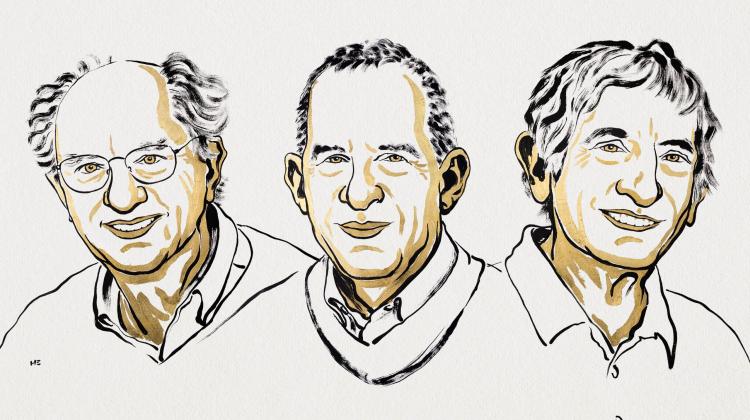
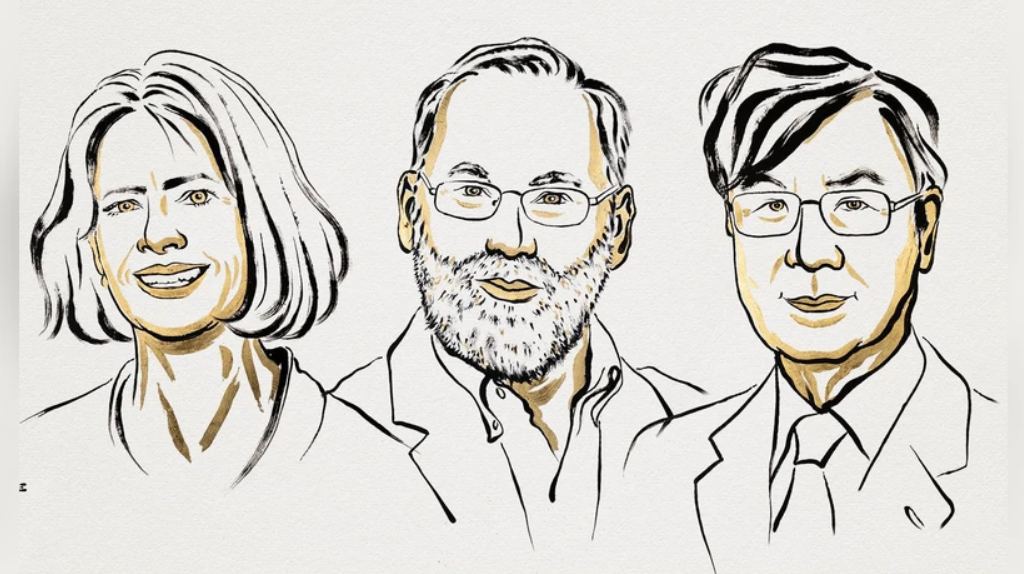
This year’s Nobel Prize in Physiology or Medicine has been awarded to Mary E. Brunkow and Fred Ramsdell from the United States, and Shimon Sakaguchi from Japan. The 2025 laureates explained the mechanisms responsible for so-called peripheral immunological tolerance, and more precisely, they identified the cells that determine the existence and performance of this mechanism — the so-called regulatory T lymphocytes (short: Tregs).
In general, T lymphocytes are a specialized group of white blood cells. There are two main types of T cells: helpers (T helpers) and killers (natural killers). All T lymphocytes have proteins on their surface called T-cell receptors, which allow them to “scan” other cells to check whether the body is under attack. Helper T cells constantly patrol the body and, upon detecting invading microorganisms, alert other immune cells to launch an attack. Killer T cells, in turn, destroy cells infected by viruses or other pathogens and can also target tumor cells.
The maturation of T lymphocytes takes place early in life in the thymus and is referred to as central immunological tolerance. If the cells’ reactivity is normal and their receptors are properly formed, they are released into the bloodstream, where they begin their “work” — eliminating pathogens that cause infections. However, if lymphocytes have receptors that predispose them to attack the body's own tissues — making them “aggressive” — they must themselves be eliminated. In this way, central tolerance ensures balance, or homeostasis, in the immune system.
The 2025 Nobel laureates discovered that another mechanism also operates outside the thymus. This mechanism is known as peripheral immunological tolerance. Research on this subject was initiated by Shimon Sakaguchi, who worked at the Aichi Cancer Center Research Institute in Nagoya, Japan. His team identified cells in peripheral circulation that regulate this mechanism — the regulatory T lymphocytes. It should be added that helper T cells can be recognized by the presence of a protein called CD4 on their surface, while killer T cells are characterized by the protein CD8.
In an experiment protecting mice from autoimmune diseases, Sakaguchi used helper T cells carrying CD4 on their surface. Typically, these cells stimulate and activate the immune system, but in Sakaguchi’s experiment, the immune response was instead suppressed. He concluded that there must exist different forms of T lymphocytes bearing not only CD4. It took Sakaguchi over ten years to prove this hypothesis, but in 1995 he demonstrated that T lymphocytes capable of calming the immune system carry both CD4 and another protein, CD25. He called this new class regulatory T lymphocytes.
Although the discovery of Tregs led to several important publications — the most groundbreaking of which appeared in 1995 in the Journal of Immunology — the scientific community was initially skeptical about this mechanism. Many researchers doubted that the immune system could include elements that do not boost immunity, but rather suppress it.
The contribution of the other two 2025 laureates, Mary E. Brunkow and Fred Ramsdell, was to provide scientific evidence in support of Sakaguchi’s hypothesis. In the late 20th century, they were studying the genetic basis of autoimmune diseases in mice. They succeeded in identifying the FOXP3 gene, a mutation of which caused symptoms of self-aggression in rodents. In 2001, in a paper published in Nature Genetics, Brunkow and Ramsdell demonstrated that mutations in the FOXP3 gene are responsible for both the human disease known as IPEX and the corresponding poor health of mutant mice. It is worth emphasizing that Brunkow and Ramsdell identified FOXP3 and its biological functions before the sequencing of the human genome, making their research comparable to finding a needle in a haystack.
The FOXP3 gene and the protein it encodes are essential for the development and functioning of regulatory T lymphocytes. These cells prevent other T lymphocytes from mistakenly attacking the body’s own tissues and help to calm the immune system once an invader has been eliminated. The discoveries recognized by this year’s Nobel Prize have made it possible to better understand the mechanisms underlying autoimmune diseases such as type 1 diabetes, multiple sclerosis, and rheumatoid arthritis.
According to Thomas Perlmann, Secretary of the Nobel Committee for Physiology or Medicine, this year’s award focuses on fundamental rather than applied research. Although the discoveries made by the three laureates were later expanded upon by other scientists and applied to clinical contexts, the Committee chose to honor those who initiated an entirely new line of thinking rather than those who developed therapeutic solutions.