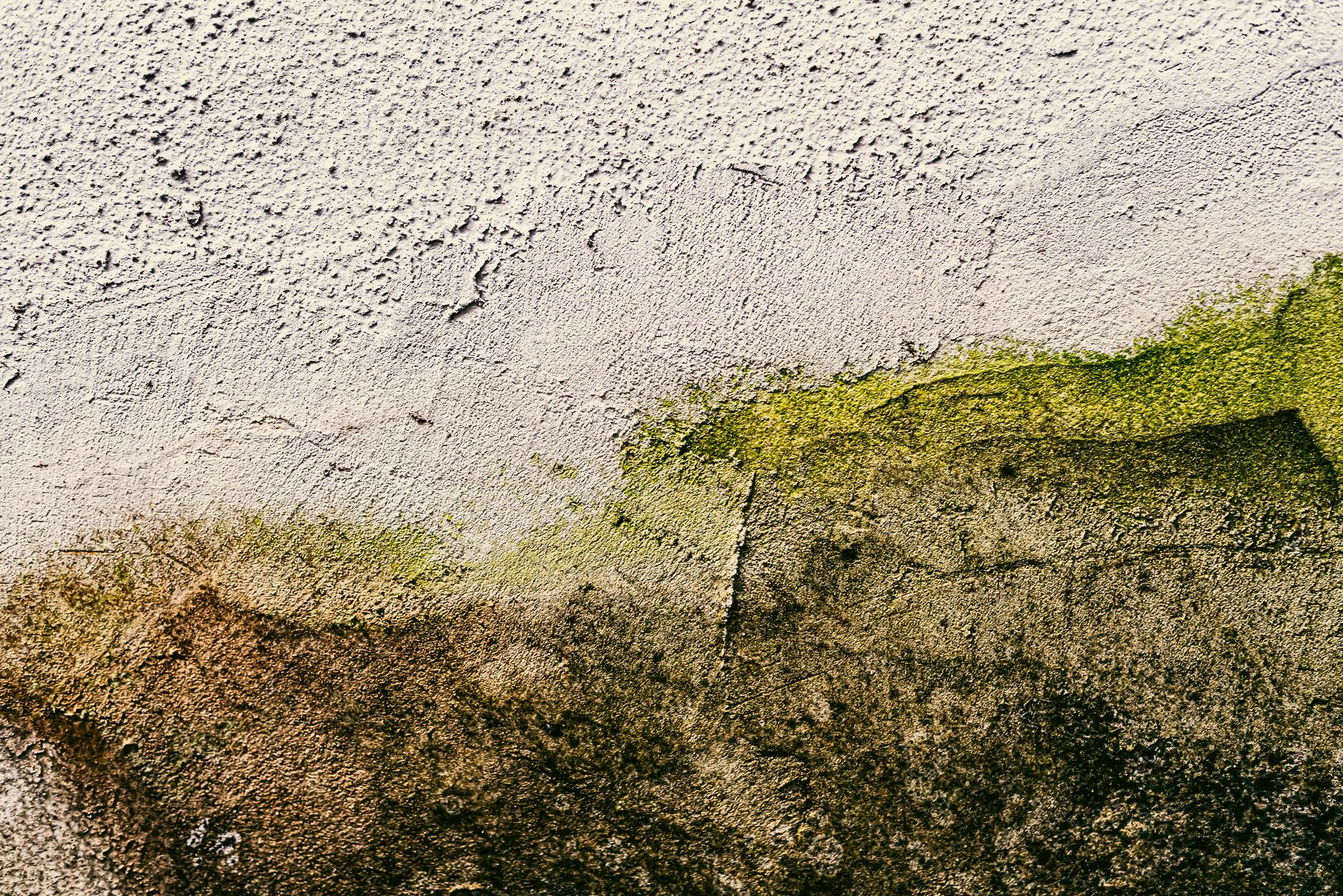
Their growth is not merely an aesthetic issue. Through a process called biodeterioration, these microorganisms can destroy building materials by penetrating their structure, causing microcracks, and increasing plaster absorbency. Fighting them is costly, and their effects concern not only single-family homeowners but also housing cooperatives, renovation contractors, investors, and conservators focused on building longevity.
For years, the simplest solution seemed to be chemical biocides—substances added to paints and plasters to effectively inhibit algae and fungal growth. Manufacturers eagerly claimed long-term protection against microbial colonization based on these additives. The problem? These claims were rarely backed by credible, standardized tests accounting for real atmospheric conditions, such as rain washing out active biocide substances or solar radiation weakening aging materials.
The Dilemma: Ecology vs. Durability
Today, we face an even greater challenge. On one hand, ecological awareness and health concerns are growing. More investors, aligned with sustainable construction principles, seek natural materials free of toxic additives. On the other, EU regulations are increasingly phasing out harmful biocidal substances that once formed the basis of facade protection. This raises a fundamental question: How can we reconcile these needs? How do we ensure facades remain aesthetic and durable while being environmentally friendly and safe for health?
Building materials manufacturers are urgently seeking new, safe solutions. However, for their products to compete on the market and offer reliable guarantees, they need a tool that credibly and relatively quickly assesses how long a new, eco-friendly plaster formula will resist microbial attack.
The answer is a novel testing method developed at the Department of Environmental Biotechnology (DBE) at Lodz University of Technology. At DBE, we created a procedure that predicts in the lab how many years a given plaster will withstand real-world conditions before algae and fungi appear.
The Key to Success: Simulating Environmental Conditions
The breakthrough was simulating real environmental conditions. Previous standards only confirmed if a product worked “here and now.” Our method goes further. It involves cyclically repeating the testing procedure, where each cycle simulates one year of facade exposure to outdoor conditions. First, plaster samples are subjected to water (washing out biocides) and UV radiation (weakening the coating structure)—just as happens during real rain and sun exposure. Only these “aged” samples then move to the next stage, where a mixture of microorganisms is applied. Crucially, these are selected algae and fungal species most common on facades in our climate zone.
After several weeks of incubation under conditions favoring microbial growth, the surface coverage is evaluated. If the sample remains clean, the cycle restarts. The number of successfully completed cycles translates to years of real-world plaster durability. This simple yet highly effective tool allows manufacturers to verify products and gives investors confidence in choosing eco-friendly materials with proven long-term aesthetics.
Practical Verification
This method is more than theory. We validated it by setting up test plots where we observed real plasters for three years and compared them to lab samples. Results were very promising: For most materials tested, lab behavior after several cycles perfectly mirrored outdoor facades after years of exposure.
Importantly, tests revealed huge durability differences. Mineral or silicone plasters without protection began colonizing after 1–2 cycles (aesthetic lifespan of just 1–2 years). Modern plasters with well-formulated antifungal and antialgal agents remained pristine even after 10 cycles. The method is already patent-protected (P.444942).
A Future Without Guesswork
This method is more than theory. We validated it by setting up test plots where we observed real plasters for three years and compared them to lab samples. Results were very promising: For most materials tested, lab behavior after several cycles perfectly mirrored outdoor facades after years of exposure.
Importantly, tests revealed huge durability differences. Mineral or silicone plasters without protection began colonizing after 1–2 cycles (aesthetic lifespan of just 1–2 years). Modern plasters with well-formulated antifungal and antialgal agents remained pristine even after 10 cycles. The method is already patent-protected (P.444942).