What is the purpose of the designed building?
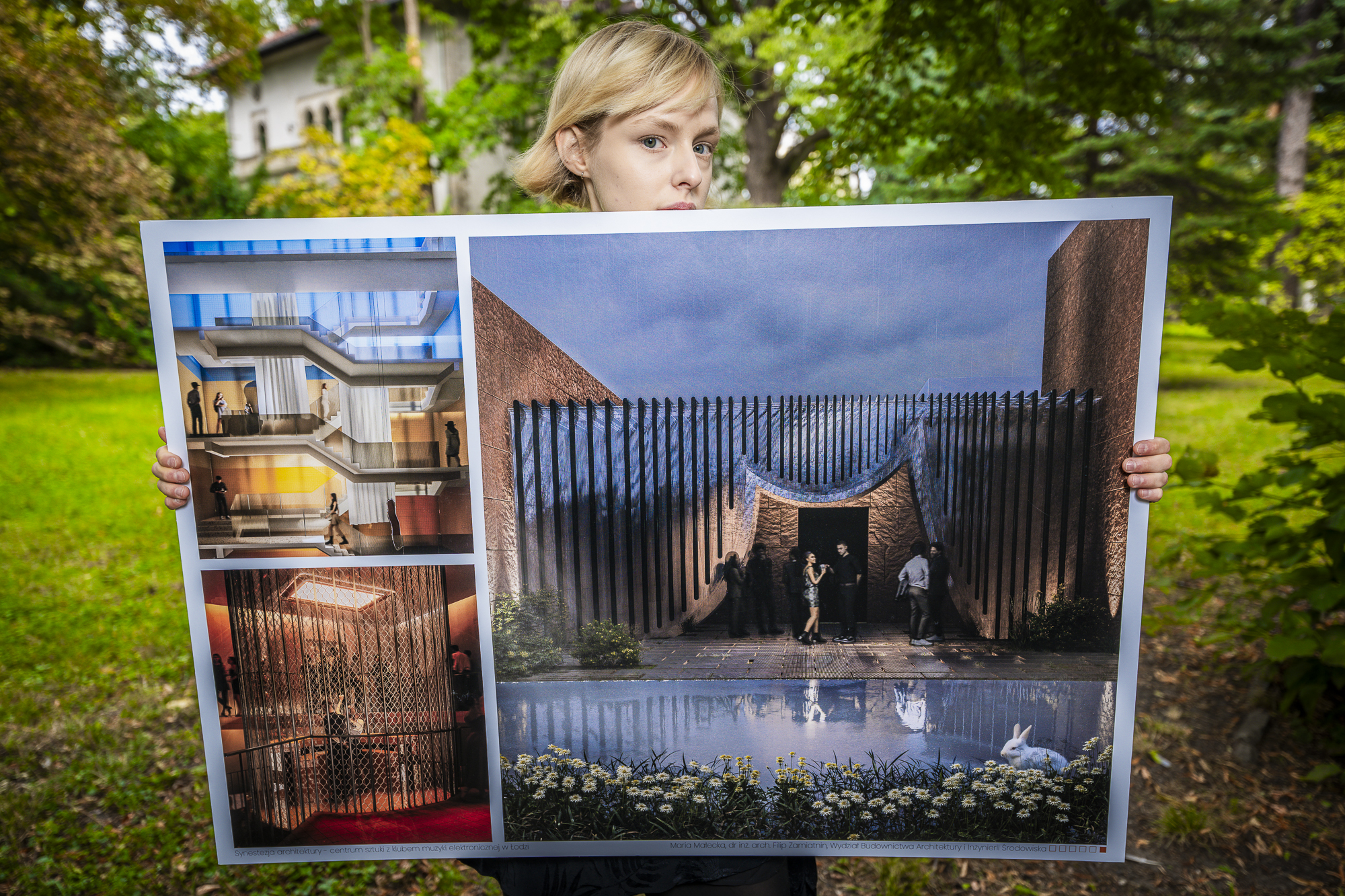
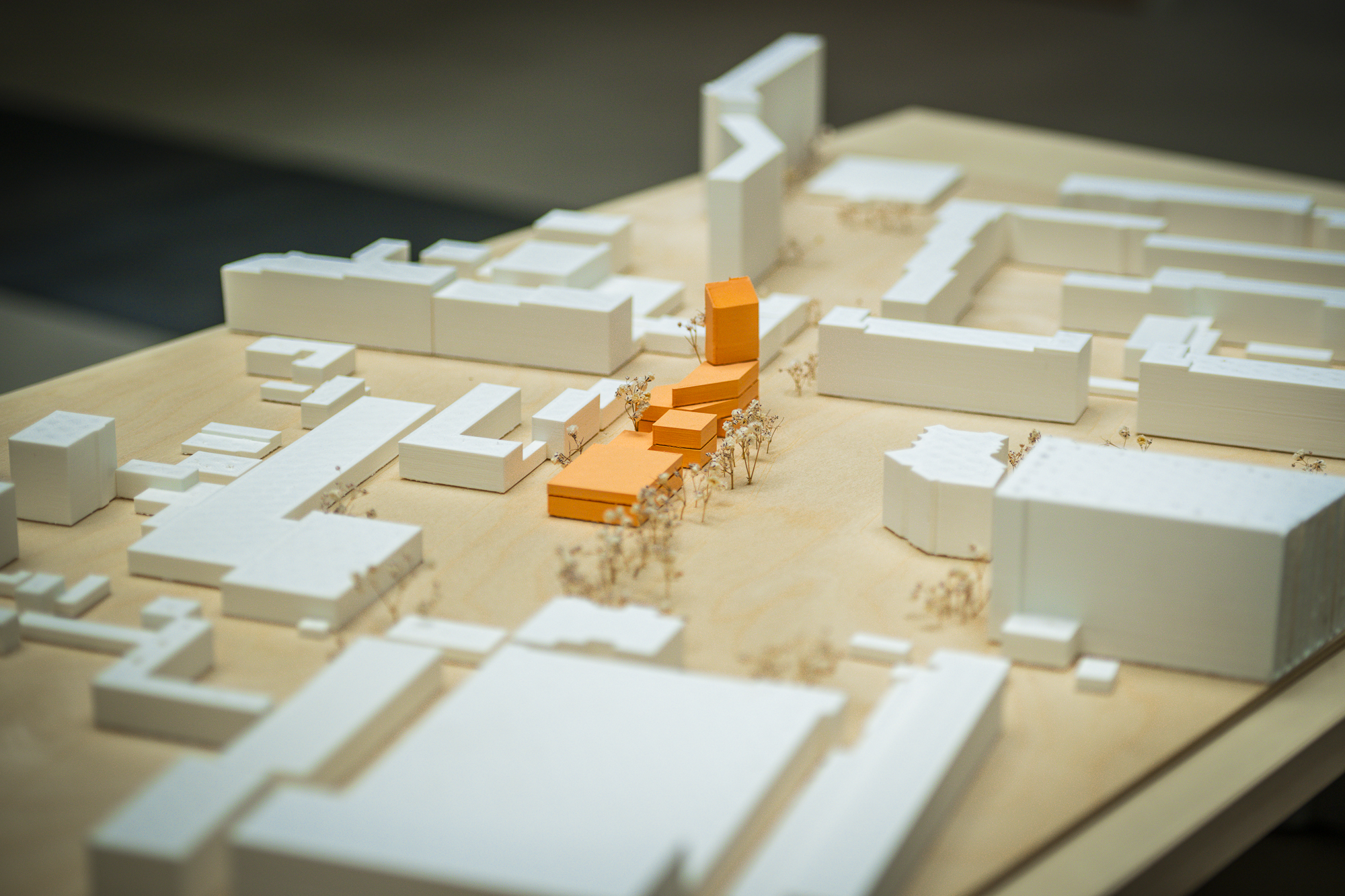
The project's formal layout reflects its diverse functions, ensuring the building buzzes with life around the clock. The daytime zone includes art studios, workshop rooms, and co-working spaces. Entry leads through a tower serving as an exhibition space with a viewing terrace offering perspectives on the historic church, factory, and Lodz skyline. The city's jukebox acts as a connector between zones—a 24/7 accessible space leading directly to the kingdom of night: the electronic music zone.
What is sensual architecture?
It focuses on the full sensory experience from human interaction with architecture—not just visual perception, but also through hearing, smell, touch, and taste. Each space has its own unique sensory imprint, tailored to individual perception. This approach emphasizes that architecture is not merely visual form but an experience where body and senses actively engage with the space.
Sensual architecture aims not only to shape form but to craft individual atmospheres that evoke emotions and build human connections. As S. E. Rasmussen put it: "Alongside the prevalent eye architecture, there is haptic architecture of muscles and skin." Thus, spaces must be treated multilayered, multidimensional, and multisensory, engaging various perceptual zones. In this sense, architecture serves not just functional roles but roots deeply in the user's emotional experience.
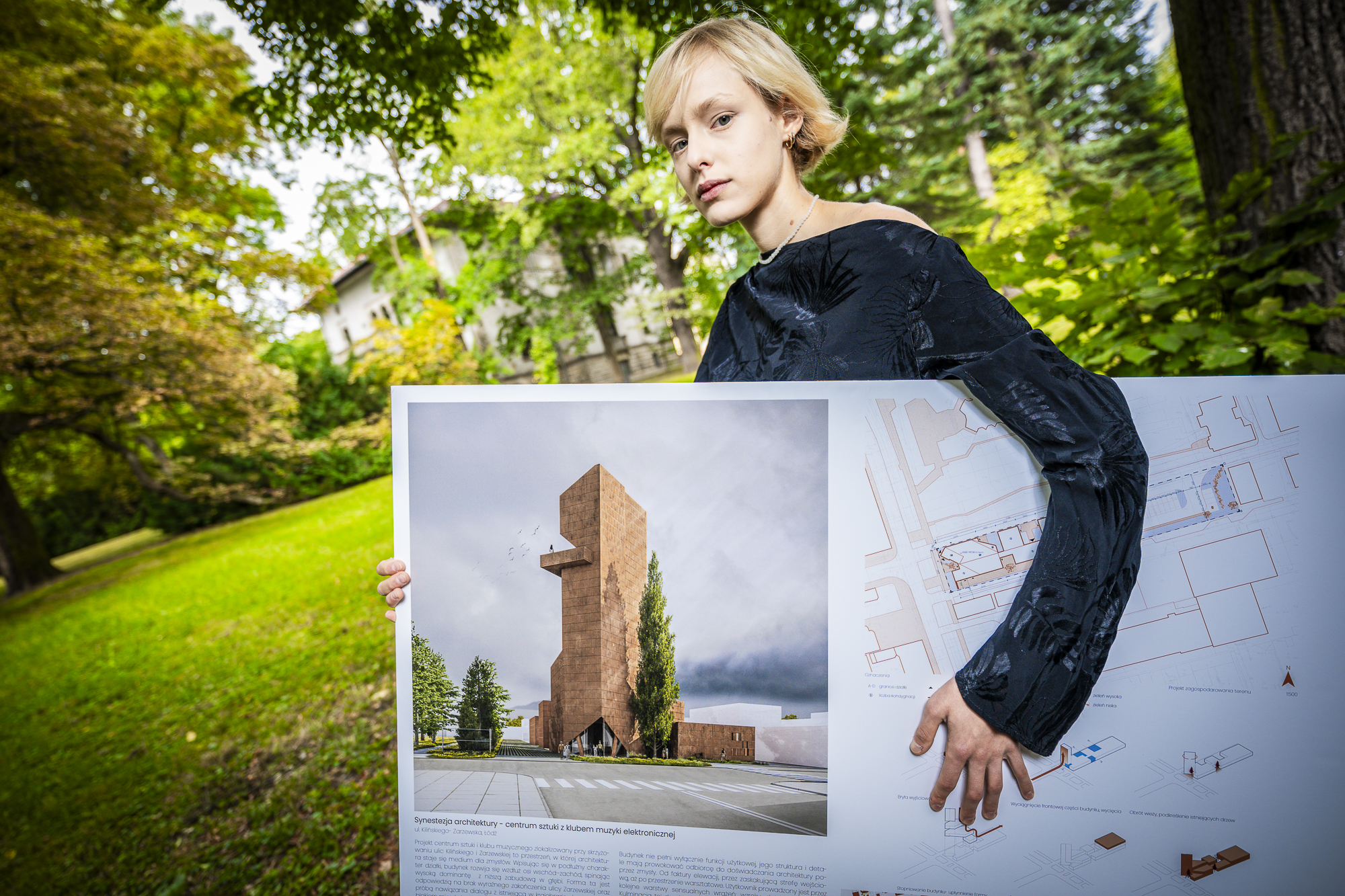
fot. Marcin Szmidt
What inspired you to pursue this diploma thesis?
My interest in the intersection of expression and senses in architecture stems from the scientific work of my supervisors, Dr. Filip Zamiatnin and Dr. Marta Piórkowska. Formal explorations are less straightforward, as spaces themselves often dictate direction. I also draw inspiration from daily life, accompanying experiences, and events.
What did you consider in your design?
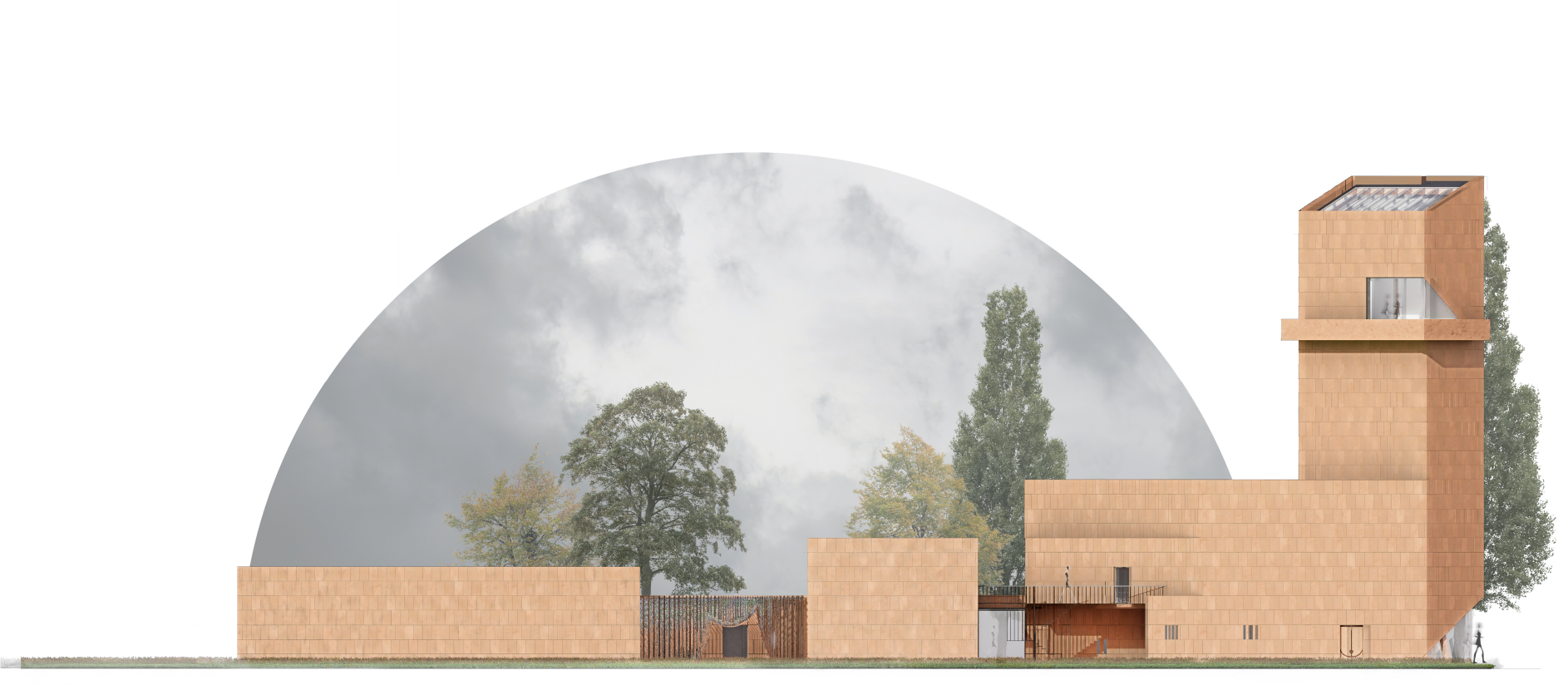
The project responds to 21st-century issues: sensory overstimulation and visual dominance, countering contemporary architecture's rejection of site context. It ties into place identity—the collective history of our city. The building draws ideational inspiration from industrial complexes, where separate structures or additions reflected evolving functions. The tower accents Zakrzewska Street's axis and evokes Lodz factory chimneys. Finished in mass-dyed concrete panels proportioned by the golden ratio, its brick-red hue modernly interprets Lodz's industrial brickwork.
What exactly does your proposal include?
This conceptual thesis meets formal-legal requirements from technical standards, though student projects can't fully develop coordinated branch designs needed for architecture. Still, adopted branch assumptions provide a basis for construction documentation.
How do you view contemporary architecture?
Quoting Tom Dyckhoff: "We live in an age of spectacle, treating architecture as a purely aesthetic visual object—a hollow shell stripped of emotion and materiality." Building on this, much contemporary architecture trends toward uniformity and repeatability, where buildings could relocate elsewhere and function similarly, losing contextual roots. Yet, counterexamples prove architecture can deeply connect with surroundings, emotions, and site history. For me, it must go beyond visual effect to forge relations with people and their spaces.
What do you think of Lodz architecture?
What can be done, in your view, to best serve residents? Lodz is slowly reviving the valuable idea of city living. The Fuzja residential-service complex exemplifies this, drawing more visitors yearly. Yet, we still lack spaces dedicated primarily to electronic music, plus venues fostering human bonds and relations.